Author name: admin

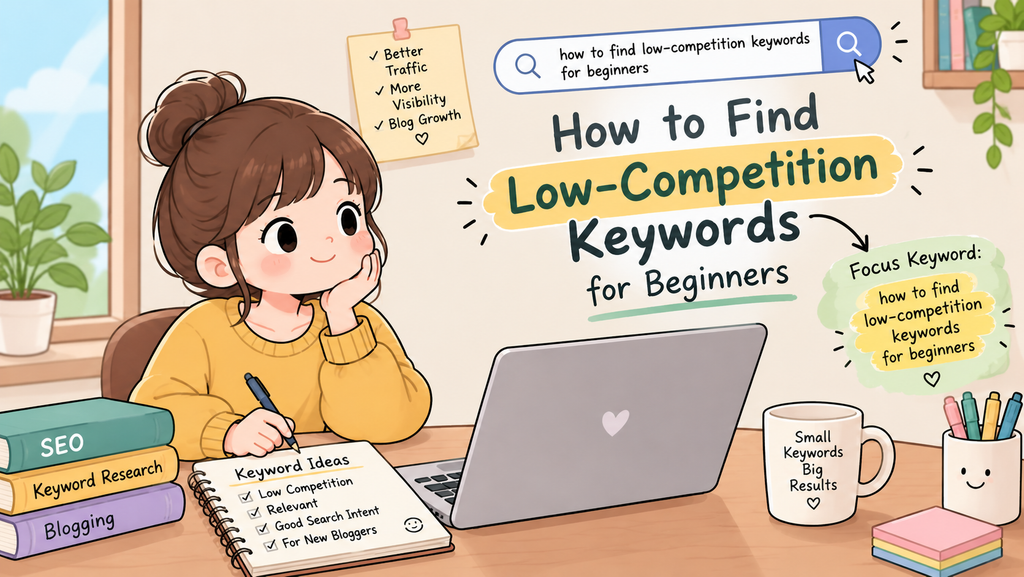
A beginner blogger learning how to find low-competition keywords for beginners
Blog

Low-Competition Keywords for New Bloggers: A Complete SEO Guide

Blogging can be very enjoyable, however, obtaining traffic from Google may take time. A lot of bloggers write valuable posts, but they cannot attract their audience. One of the reasons why this happens is because many bloggers use keywords which are too broad or competitive for their blogs. Learning how to find low-competition keywords for beginners can help beginners identify targeted phrases that are relevant to their topics and attract visitors interested in specific information. In this way, beginners will not need to compete with big websites for popular keywords. Instead, they can focus on topics they can cover better and improve their chances of reaching the right audience. In this article, you will learn about the keyword competition, research techniques, free tools, and methods of choosing keywords for your blog. What Are Low-Competition Keywords? Keywords having low competition are those which have very little amount of strong competing pages targeting these keywords. These keywords can present an opportunity to smaller sites to get featured in search engines, provided that their content relates well to the requirement of users. Here are two examples of such keywords: The first keyword represents a general topic and is related to many types of searches. On the other hand, the latter keyword represents a specific topic, especially for a certain type of audience. It will be easy for a blog to generate relevant content regarding the latter topic. Nevertheless, the competition level will depend upon the search results, already existing websites and the relevancy of the content. It doesn’t matter how much traffic you can have from a keyword; what matters is its relevancy and purpose. Why Should New Bloggers Focus on Low-Competition Keywords for Beginners? Selection of a proper keyword makes it easy for one to develop their web content based on the information being searched by the target audience. It could also be more practical when developing a new site.  1. Find More Realistic Ranking Opportunities Most websites have good quality content, back links, and brand equity. It becomes hard to compete with them when one starts blogging. There may be specific keywords where your blog could add more clarity on a particular topic. This does not imply that it would rank higher, but it provides a good start point. 2. Reach the Right Audience There are a number of things that someone looking for a generic term might need. However, there is more clarity in the goal of someone looking for a solution. For instance, a person looking for information on “SEO tips for WordPress beginners” would probably not be looking for an introduction into digital marketingts more visitors. 3. Create Relevant Content About One Topic This would result in writing more relevant content which attracThe process of keyword research allows one to identify some questions that are interesting for his/her audience and which may be used to write several interrelated articles. For instance, an article about digital marketing could include information on keyword research, on-page SEO, internal links, and site performance. How to Find Low-Competition Keywords for New Bloggers You don’t have to buy an expensive SEO subscription to start keyword research. There are some free ways to find ideas for topics. 1. Start With a Relevant Topic To get started, pick a topic relevant to your website. If your website is about digital marketing, topics may be SEO, social media marketing, email marketing, content writing, and AI tools. Note the questions a beginner may have about each topic. For instance, a beginner owner of a website may be interested in how to increase page speed, pick keywords for blogs, or how to make a good meta description. Such questions can become the basis for keyword research. 2. Use Google Search Suggestions Google Search is a convenient tool to find topics depending on the keywords entered by people. Enter a broad topic in the search bar and pay attention to the suggestions shown. You may also look at the “People also ask” and the “Related searches” sections on the search result page. For instance, the keyword “blog SEO” will give you suggestions about the basics of SEO, keyword research, and content optimization. Make a list of relevant phrases and explore them. Search suggestions allow you to find ideas, but 3. Use Google Keyword Planner Tool This is an online tool that allows you to find search-related terms as well as the approximate number of searches for these terms. You can use this tool to choose from among various keyword ideas to decide which topic to write on. Go ahead and enter any subject, for example, “keyword research.” See the list of suggested phrases. See if you can find the terms that match your website and the information you can give. Keep in mind that competition in Keyword Planner refers to advertising competition, not SEO difficulty. 4. Find Long-Tail Keywords Long-tail keywords refer to specific phrases with multiple words that will help you narrow down your topic or the audience you are writing for. Here are a few examples: The last phrase provides a clear idea to the writer what he needs to do in his article. Long-tail keywords may or may not be competitive, and some long-tail keywords get hardly any search volume. 5. Analyze Google Results Should you select a possible keyword, use it to search Google. Look through the pages located at the top positions and consider whether they are capable of giving the necessary information, answering the question entirely and providing examples to the fullest. Consider actual content gaps that might exist. There could be any missing guide or questions people are searching for but cannot find the answer. Use this knowledge to produce better articles. Do not copy the content from the competing websites; the goal is to provide an explanation of your own. 6. Keyword Difficulty SEO tools such as Ahrefs and Semrush can determine the difficulty of a particular keyword. The metric can help you in choosing between different keywords. In case of […]
AI in Content Marketing – Using AI Tools to Create and Optimize Marketing Content
Blog

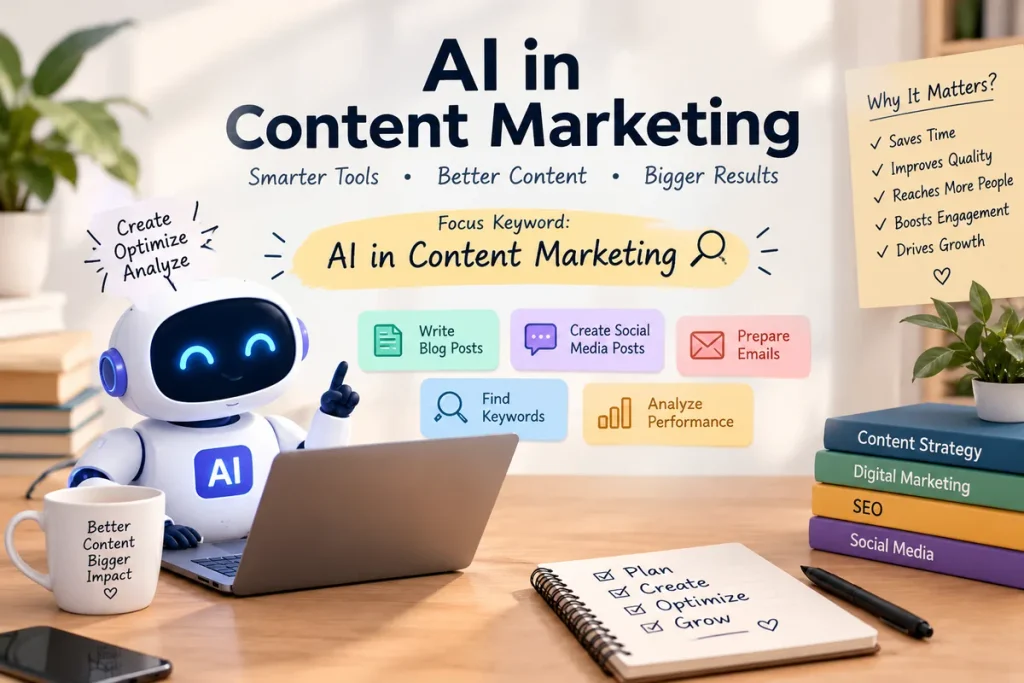
AI in Content Marketing: How AI Helps Create Better Content 2026

Introduction Content marketing is one of the critical components of digital marketing. Businesses engage the target audience through blog posts, social media updates, videos, and e-mail messages. However, creating high-quality content on a regular basis might require some efforts and time. This is when the application of AI in content marketing becomes relevant. Artificial intelligence assists marketers in generating content ideas, planning articles, writing draft versions, and comprehending the preferences of their audience. When employed wisely, AI can make content creation much simpler and faster. In this article, we will discuss advantages of AI in content marketing, most common applications, and ways for businesses to utilize AI to benefit from it. AI in Content Marketing also helps businesses plan relevant topics and create content that connects with their target audience. What Is AI in Content Marketing? AI in content marketing entails the employment of artificial intelligence to plan, create, enhance, and analyze marketing content. These technologies will assist marketers in coming up with suitable topics for blogs, writing social media posts, preparing emails, and even generating suitable keywords. The technology can assist in organizing content ideas according to interests of the target audience. However, AI is meant to be an aid to creativity and not the opposite. Therefore, marketers have to analyze the content, verify that facts are right, and that it is of value to readers Benefits of AI in Content Marketing 1. Saves Time and Effort Manual creation of content for various platforms can take some time. AI solutions will help to come up with ideas, outlines, and drafts faster. For instance, a digital marketer will use AI to come up with several Instagram caption ideas for the same business campaign. 2. Helps to Come Up with Content Ideas Marketers can sometimes have challenges coming up with new content ideas for their blogs and social media accounts. AI will make suggestions based on a business niche, target audience, and customers’ common questions that can inspire the content. 3. Helps to Optimize SEO Content AI will help with keywords research, content structure, headings, and related topics. A content marketing blog, for instance, may include topics such as content planning, audience research, SEO content writing, and analysis of content performance. Use of proper keywords will help the readers and search engines identify what the content is all about. However, stuffing of keywords is not advisable. 4. Makes Personalization Easier Audiences have various interests and preferences. AI will help marketers to analyze the data about the audience and create personalized content. For instance, the skincare business will create various types of content for people How to Use AI for Content Creation AI is an important tool that businesses can employ in every step of the content creation process. Blog writing: Idea generation, outline creation, and drafting. Social media marketing: Generation of social media caption ideas and creating a social media calendar. Email marketing: Drafting emails and generating subject lines. Video marketing: Generating video ideas and drafting scripts. AI-created content needs to be edited before publishing. Injecting personal experiences, facts, and insights will make the content more valuable. Popular AI Tools for Content Marketing There are many tools that will assist you in doing different tasks in content marketing. ChatGPT ChatGPT will help in generating ideas for topics, article outlines, caption ideas, and rewrite the draft. Canva AI The AI functions from Canva will help in designing visual content and other marketing materials. Grammarly Grammarly will help in improving your grammar and other elements of writing. Google Trends Google Trends will assist marketers in exploring search interest and comparing different topics. Google Trends is not an AI writing tool, but it can assist in researching content. Challenges of Using AI in Content Marketing However, apart from the benefits associated with AI, it also has some limitations. Information generated by AI might be erroneous and out-of-date. The writing style will also be repetitive if the marketers fully rely on the automation of writing. These limitations can be avoided by cross-verifying the facts, adding original examples, checking the language, and ensuring that the content answers all the questions of the reader. Generating a lot of low-quality content just to cover some keywords is not a good content marketing approach. Best Practices for AI in Content Marketing Frequently Asked Questions 1. How does AI impact digital marketing? With the help of AI, marketers can learn about the needs of their customers, generate content ideas, conduct data analysis, and make their marketing campaigns more effective and efficient. 2. Does AI work for SEO? Sure, it can assist in conducting keyword research, content optimization, analyzing search intent, and finding opportunities for website ranking improvements. 3. How does AI help in social media marketing? It allows marketers to learn about the interests of their audience, come up with the content plans, analyze the engagement level, and find ways to communicate with their followers. 4. Is AI replacing digital marketers? Absolutely not! AI assists digital marketers in performing routine tasks and providing valuable insights that can be helpful to them. 5. What are the advantages of applying AI in digital marketing? Time savings, better audience targeting, data-driven decisions making, and the creation of more relevant marketing campaigns are among the key benefits. 6. Does AI have any benefits for small businesses? Certainly! They can be used for generating content ideas, improving communications with customers, and managing marketing campaigns. Conclusion AI in content marketing can be helpful for companies to create content faster and come up with new ideas, along with helping with their SEO strategies. But successful content marketing isn’t just about automating everything. Knowing your audience, verifying information, and sharing original ideas are all important factors. Using the power of AI technology together with creative thinking, companies can establish an efficient content marketing strategy. Read More: Learn about our comprehensive guide on How AI Is Transforming Digital Marketing: Everything You Need to Know.

Blog

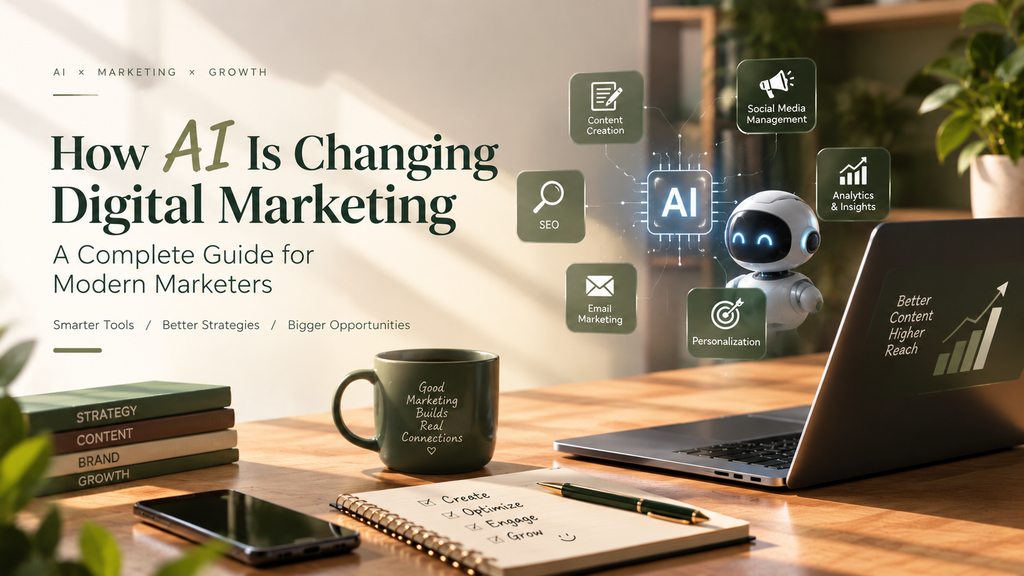
How AI Is Changing Digital Marketing 2026 : The Best Guide for Modern Marketers

How AI Is Changing Digital Marketing: A Complete Guide for Modern Marketers explores the growing impact of artificial intelligence on the digital marketing industry and how it is shaping the future of modern marketing. Artificial Intelligence (AI) is disrupting the field of digital marketing at an unprecedented speed. Today, companies use AI in order to learn more about customers, develop content, enhance advertising, automate tedious tasks and make marketing decisions. Regardless of the size, from local businesses to multinational corporations, today AI became a key component of any successful marketing strategy. However, How AI is Disrupting Digital Marketing is not only about employing AI tools to automate certain operations. Rather, it is about how marketers rethink their understanding of target audiences, campaign development and customer experience. In this guide, we will take a look at the role of AI in digital marketing, as well as the main advantages and disadvantages of using it What Is AI in Digital Marketing Digital marketing uses AI in the application of artificial intelligence technology to analyze data, customer behaviors, automate processes, create content, and enhance marketing efforts. Traditional marketing requires manual analysis and research efforts. The technology allows AI to go through a massive amount of data more quickly and recognize certain patterns that humans cannot. Moreover, AI technology can assist marketers to recognize what the customer is interacting with on their website and what kind of product, topic, or service he/she might be interested in. This is why the theme How AI Is Changing Digital Marketing becomes relevant to the modern business world. How AI Is Changing Digital Marketing Through Content Creation One area where the influence of AI has been huge is that of content marketing. There is a need for continuous creation of blogs, social media updates, email marketing, advertising, product descriptions, and videos by marketers. The manual effort that is needed for all these is not small.How AI Is Changing Digital Marketing can be seen in the way AI helps marketers with However, AI technology should not fully substitute humans working on content creation. AI is able to give ideas and make drafts, while marketers use their experience and creativity. It is possible to say that the combination of AI and human creativity may accelerate content creation process. AI-Powered Personalization Consumers require brands to offer them experiences which are in line with their interests. In most cases, general marketing messages might not work. AI technology allows companies to develop personalized experiences for their consumers by examining the customer behavior, preferences, browsing history, and past interaction. For instance, in an online shopping website, AI will be able to suggest products based on the previous views or purchases of the customers. Some examples of personalization include: Customer communication This is among the largest impacts of How AI Is Changing Digital Marketing on customer experience. AI and Search Engine Optimization AI is also making changes to Search Engine Optimization (SEO). SEO experts can employ AI-based tools to conduct research for finding out keywords, identifying search intents, researching competitors, creating content, and even discovering topics to cover. Instead of concentrating on only one keyword, marketers can find out related questions and subtopics being searched by people. For instance, while doing research on AI marketing, marketers may also research other relevant keywords such as While using relevant keywords in valuable content, marketers can help search engines understand the topic. But SEO is not just keyword stuffing. The ultimate goal of the search engine is to provide valuable information to the users. AI in Digital Advertising The field of digital marketing produces huge amounts of data. Marketers must comprehend audience behavior, ad performance, engagement, conversions, and campaign effectiveness. AI can analyze all this data and assist marketers in optimizing their ad campaigns. AI can be used for For instance, AI could detect which audience segments perform better with a certain ad. Thus, marketers will not base their decisions only on assumptions but will have more data-driven decisions. That is why the knowledge of How AI Is Changing Digital Marketing is becoming essential for paid advertising professionals.Can Be Detected AI Chatbots and Customer Experience There is an increasing relationship between customer service and digital marketing. The use of AI chatbots will help to respond to common inquiries, provide information on products or services, offer guidance on the website, and support customer needs with simple inquiries. For instance, the website of any company may have an AI chatbot to respond to the following questions from clients a company should have access to human support whenever there is a difficult question that requires human judgement. AI in Social Media Marketing Social media marketing involves continuous creation of content, engaging with the audience, tracking of trends and analysis of performance metrics. The AI can help in some of these tasks for the marketers. The AI can aid in creating social media content, analyzing engagement metrics, spotting content trends and different ways of communicating with the audience Marketers can leverage AI to analyze what kinds of content are performing better and then create better content in the future based on those insights. Marketers can also save time while managing their repetitive tasks with the help of the AI. But the success of social media marketing depends a lot on creativity and communication by humans. Predictive Analytics and Customer Behavior Social media marketing involves continuous creation of content, engaging with the audience, tracking of trends and analysis of performance metrics. The AI can help in some of these tasks for the marketers.How AI Is Changing Digital Marketing can be seen through the use of AI in social media marketing. The AI can aid in creating social media content, analyzing engagement metrics, spotting content trends and different ways of communicating with the audience. Marketers can leverage AI to analyze what kinds of content are performing better and then create better content in the future based on those insights. Marketers can also save time while managing their repetitive tasks with the help of […]

Blog

Hello world!

Welcome to WordPress. This is your first post. Edit or delete it, then start writing!

Scroll to Top